 1-216-595-0695 Sales

Mobile Inmate Tracking
Defensible logs of officer and inmate activity.
Officers use Guard1 mobile devices as a digital logbook, recording all of their rounds, completed activities, inmate movement, and more to use as defensible evidence for inspections.

Why Mobile Inmate Tracking?

Paper logbooks are not enough for all of the things line staff are responsible for. They are often unreliable, difficult to read, and nearly impossible to gauge real-time compliance performance.
Most agencies use them in conjunction with manually entering checks into their management system or verifying complete rounds or activities with video cameras.
While this does produce an electronic record, it typically only covers a small portion of officer activities - and hardly ever at the point of responsibility.
Combined with the ongoing staffing challenges facing agencies across the country, there is a need for a system that can act as a digital logbook, electronically recording rounds and activities to produce defensible electronic logs.
What is Mobile Inmate Tracking?
Officers use Guard1 mobile devices as a digital logbook to record their rounds and activities. You can view a full list of checks and activities that officers can record:

Electronically log inmate checks.
Mandated 15, 30, 60 minute checks - log them with Guard1.


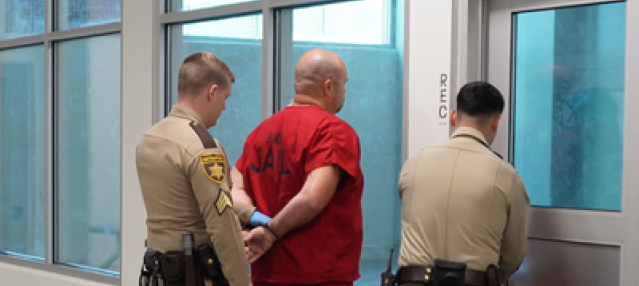


How does a Mobile RFID Inmate Tracking System Work?
Guard1 mobile devices - called SuperMAX devices - connect via WiFi. Officers will electronically log their rounds and activities with the SuperMAX, and that data will download over WiFi to the Guard1 desktop software.
How It Works
1. Officers log in to the mobile device.
2. Officers complete their rounds and assigned tasks.
3. Data downloads in real time over WiFi - giving the control room real-time visibility.
4. Regular reports run to verify compliance.
Guard1 Mobile Inmate tracking provides many benefits to agencies, such as:
Defensible logs
Guard1 provides you with a defensible electronic record of all checks and activities that were logged.
Quicker officer onboarding
Get ahead of staff turnover challenges with an easy- to-learn system that includes helpful tools like a task list and check reminders.
Real-time alerts
Supervisors receive real-time updates of made, late, upcoming, and missed checks. Customizable alerts can be set up for officers, supervisors, and command staff alike.
Gauge staff performance
Know what checks are completed on-time, and which areas or officers need additional coaching.
Increase safety check accuracy
The BetaGov Electronic Cell Check System Study found that cell checks at Tecumseh State Correctional Institution (TSCI) improved from just 56% cell-check accuracy with video and paper logs to 100% accuracy with an electronic cell check system.
Mobile Devices for Mobile Inmate Tracking
The Guard1 SuperMAX is a Corrections-Grade Device built for correctional facilities.
Built for Corrections
Custom manufactured, military-grade Android Mobile Device for Guard1
Advanced Tech
13 megapixel camera with talk-to-text capabilities
Rugged
Drop rated for 9 feet to concrete, waterproof, and a Gorilla Glass display
Long-Lasting Battery Life
Purchase Protection
5 Year Warranty
Authorized Repair Shop
98% of repairs are returned within 48 hours

How does a Mobile Inmate Tracking System Work with WiFi?
SuperMAX devices connect to your WiFi network. As most working in corrections know, WiFi can be a challenge to have full coverage in your facility because of how correctional facilities are constructed with so much concrete and steel.

If you have spotty WiFi coverage at your facility, that is not a problem with SuperMAX.
If connectivity is lost:
- The top bar of the application turns red so officers know they are not connected.
- SuperMAX retains any information entered or collected.
- Completed tasks are shown in green and remain on the task list until connectivity is restored.
- When connectivity is restored, data is synchronized with the server.
What is the difference between an inmate tracking system and mobile inmate tracking system?
There is no set definition of either system, but when we explain this to customers, we generally say:

Mobile Inmate Tracking System - a system that uses mobile devices to scan RFID and NFC tags to verify electronic proof of presence.
Mobile devices can scan RFID tags that are mounted on walls or equipment, or they can scan NFC tags that are in wristbands or ID cards to verify an activity completed for a particular inmate. This requires an action (scanning the tag) with a handheld mobile device (SuperMAX) to verify proof of presence.
Additionally, the mobile devices have other features such as photo and video evidence, eSignatures, and more.
Once these checks are completed, they are submitted to the desktop system over WiFi.
Inmate Tracking System - a system that uses "beacon" tags to track people and assets in real time.
An inmate tracking system tracks inmate movement and presence in real time to help with:
-
- Keep separate alerts
- Automated headcounts
- Compliance reporting for rec
- Full inmate movement history
- Escape prevention
It works by inmates wearing wristbands that emit a signal once per second. Our beacon tracking receivers recognize this signal and track movement in real time on a map of your facility.

Benefits of Mobile Inmate Tracking
Mobile Inmate tracking is used for:
- Gauging staff performance
- Increasing safety check accuracy (see independent BetaGov study)
- Accreditation
- Defensible evidence in the case of an incident or grievance
Correctional facilities open themselves up to liability without an electronic record of officer rounds and inmate activity.
Settlements for incidents around missed or late officer rounds are typically in the range of hundreds of thousands to millions of dollars:
Agencies that use Mobile Inmate Tracking
If you're curious to learn more about other agencies that use our Mobile Inmate Tracking system, read one of these case studies below:

Chambers Country Sheriff's Office Prevents Litigation and Goes Paperless with Guard1
Learn how Chambers County Sheriff's Office Prevented litigation from an in-custody death with Guard1.
Gregg County Jails Nearly 100% Paperless with Guard1 Mobile Devices
See why Gregg County chose Guard1 and how it's helped them record time accuracy and become a nearly paperless facility.