 1-216-595-0695 Sales


Coverage Planning Guide for Prison and Jail Panic Button Systems
Understanding Prison and Jail Panic Button Systems
Modern correctional facilities require comprehensive emergency alert coverage that works reliably through concrete walls, metal structures, and complex building layouts. Achieving this level of coverage demands careful system design and implementation.
Your Guard1 system engineer can discuss your needs and help you optimize your Duress Device system for performance, efficiency, and cost.
Signal Penetration in Correctional Environments
Prison environments present unique challenges for wireless emergency systems. Thick concrete walls, metal reinforcement, and multiple floors can significantly impede signal transmission.
Modern duress devices address this through adaptive transmission power. During normal operation, devices transmit at standard power to conserve battery life. When an emergency alert is triggered, transmission power increases dramatically - 60 to 200 times normal transmission strength, depending on the model- to ensure the signal reaches multiple receivers.
This multi-level approach enables reliable coverage while maintaining practical battery life, typically 12-18 months depending on the device type - like the Guard1 Duress Device or Guard1 Duress Pendant.
Mapping Facility Coverage Requirements
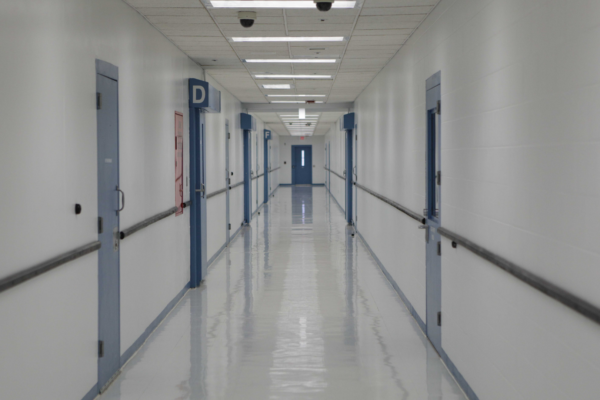
Effective coverage starts with comprehensive facility mapping. Each area requires careful analysis of construction materials, layout, and potential interference sources.
Critical areas like segregation units, medical facilities, and visitor areas need particular attention due to their heightened security requirements. These zones are often zones in custody areas that may benefit from additional receivers or precision location tags for enhanced accuracy.
Signal strength calculations need to consider floor thickness and materials when planning receiver placement between levels. Testing may also be required.
Infrastructure for Reliable Coverage
The backbone of any prison panic button system is its receiver network. Receivers are strategically placed throughout the facility to ensure multiple units can detect each transmission.
Modern receivers provide continuous system health monitoring through regular heartbeat signals. This allows facilities to detect coverage gaps or equipment issues before they impact emergency response capability.
Network infrastructure must include redundant paths to maintain coverage during partial system outages. Leading solutions employ multiple servers with automatic failover to prevent any single point of failure.
Real-Time Location Tracking
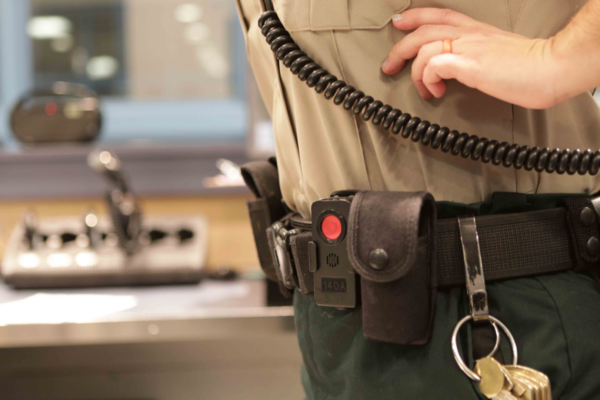
Beyond basic coverage, modern panic button systems provide zone-based location information during emergencies. This requires careful receiver placement to enable accurate zone location.
Supplemental location tags can enhance positioning accuracy to within 15 feet. These fixed reference points help systems determine exact locations even in complex building layouts.
Location data must update in real-time as staff move through the facility. Advanced systems, like the Guard1 jail and prison panic button system, achieve this through once-per-second transmission rates, providing continuous position tracking.
Coverage Testing and Verification
Regular coverage testing is essential for system reliability. Modern duress devices include self-test capabilities that verify end-to-end system functionality.
Staff can test devices before entering secure areas, confirming both transmission and reception. Some systems require acknowledgment from the control room to complete the test, ensuring full system operation.
Environmental Factors
Temperature variations and humidity can impact system performance. Modern duress devices are designed to operate reliably from -40 to 158 degrees Fahrenheit.
Regular system audits help identify environmental changes that might impact coverage. This includes new equipment installations, building modifications, or changes in facility usage patterns.
Future Coverage Innovations
Emerging technologies are enhancing coverage capabilities. New receiver designs offer improved sensitivity and better penetration through difficult materials.
Advanced location detection is improving position accuracy without requiring additional infrastructure. This enables better tracking in areas with limited receiver coverage.
Conclusion
Reliable panic button coverage in correctional environments requires careful attention to signal propagation, infrastructure design, and ongoing system maintenance. Modern solutions combine powerful transmission capabilities, redundant infrastructure, and sophisticated monitoring to ensure staff protection throughout the facility.
Success depends on understanding facility-specific challenges and implementing appropriate technical solutions. As technology advances, facilities gain access to better coverage tools while maintaining practical operational requirements.